The Rise of Web Utilities: How to Extract Audio from Video and Split Stems Free
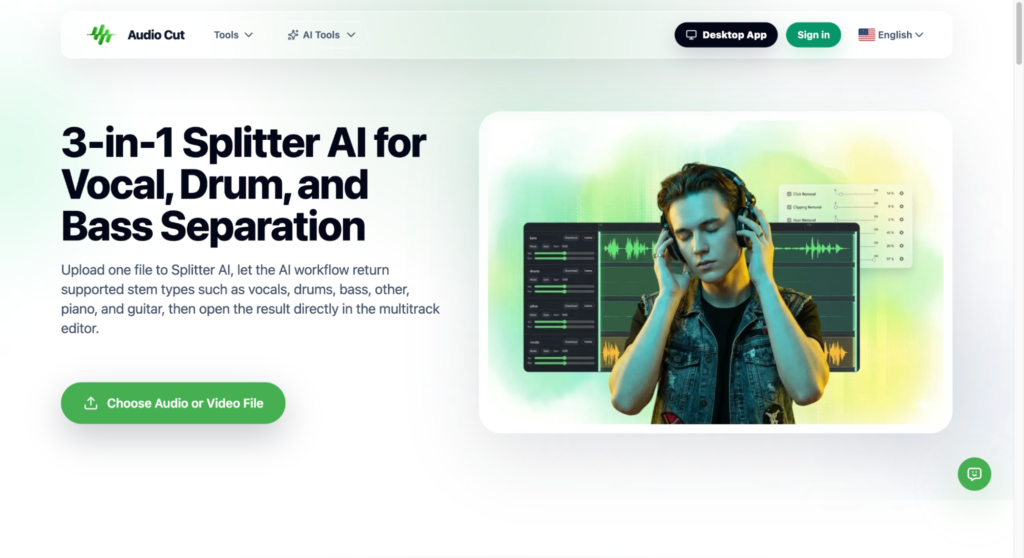
Behind the scenes for some years, there has been an inconspicuous trend towards these little, one function online tools – tools in place of software that we once would of needed to install, create accounts, and almost certainly paid the subscription to perform an almost mundane function – and in my opinion none more so clear an example than audio extractors/stem seperations – here are my thoughts on why it happened and the implications for the future.
From Installed Software to Browser Tabs
For a long time, doing anything meaningful with audio meant installing something – a DAW, a converter, a dedicated editing program. Even simple tasks got funneled through heavyweight software because that’s what was available. This created a real barrier for casual users, who didn’t want to install a full program, learn its interface, and manage yet another piece of software on their computer just to pull audio out of a video file once in a while.
Browser-based tools removed that barrier almost entirely. A seamless way to save time is to extract audio from MP4 directly in your browser, without installing anything, creating an account, or waiting through a lengthy setup process. The task that used to require dedicated software now just requires a web page and a file to upload.
Why Stem Separation Specifically Took Off
Stem separation deserves special mention because it went from being essentially inaccessible to casual users to being a normal, expected feature almost overnight. A few years ago, separating vocals from an instrumental with any real quality required either the original multitrack files or expensive professional software most people had no reason to own. AI-based separation changed that completely, making a previously specialist task available to anyone with a song file and a few minutes to spare.
Deconstruct music tracks seamlessly using an advanced splitter ai. This single capability opened up an entire category of casual creative use – remixing, karaoke tracks, practice material, sampling – that used to be limited to people with real production resources behind them.
Why “Free” Actually Matters Here
A lot of software historically gated basic functionality behind a purchase or subscription, which made sense for professional tools aimed at professional users, but created a real barrier for anyone who just needed something done occasionally. Web utilities built around free access to core functionality changed that calculation. When a task costs nothing and takes no setup, people actually use it for the small, casual needs that would never have justified paying for or installing dedicated software in the first place.
This matters more than it might seem for adoption. A tool that’s technically capable but requires payment or installation gets reserved for “serious” use. A free, no-friction tool gets used constantly, for tasks both big and genuinely trivial, simply because there’s no cost – in money or effort – standing in the way of trying it.
What Made This Technically Possible
None of this would have been practical even five or six years ago. Real-time or near-real-time AI processing running efficiently enough to happen in a browser, without needing powerful local hardware, is a relatively recent development. Cloud processing handles the heavy lifting, meaning even a fairly modest device can extract audio or separate stems without needing meaningful computing power locally. This is really the underlying shift that made lightweight web tools viable in the first place – the processing muscle moved off the user’s device and into infrastructure built specifically to handle it efficiently at scale.
Where This Trend Is Clearly Heading
The pattern here isn’t unique to audio. Across a lot of different tasks – image editing, document conversion, video processing – the same shift keeps happening: specialized, previously software-locked capabilities becoming lightweight, free, browser-based utilities that require no real technical background to use. What used to separate a professional from a casual user was often just access to the right expensive tool, and that gap has been closing steadily across almost every category of digital task worth naming. Audio extraction and stem separation are just particularly clear examples because the gap between “used to require real expertise” and “now takes a few clicks” is so dramatic, making the shift easy to notice in a way it sometimes isn’t in fields where the change has been more gradual.
What This Means for Everyday Users
What all of this amounts to, in practice, for the person who needs to extract an audio stream from a video, isolate vocal from instrumentation, or what have you, is this: for small, one-off uses, there are hardly any reasons to involve complex software, or to pay for a particular tool. This wasn’t the case, even a few years ago, when the same task might have meant downloading a program, waiting through an install, and learning an interface just to handle something that only needed to happen once. The gap between thinking “I want to do this” and “I am doing this” has, for most purposes involving common audio-editing functions, been entirely eliminated. All there needs to be is a browser tab, a file to upload, and a couple of minutes to wait for the processing to finish before the result is ready to use.
A Small Shift With a Bigger Effect Than It Seems
You’d think that wouldn’t change much but it’s easier to underestimate how much this changes actual behavior – as opposed to what is technically possible. If a task involved installing software, a person would just not bother with it, unless it was necessary enough to be worth the effort. Curiosity might lead to a “Huh, I wonder what this would sound like without the voices,” and it would end right there.
Now that free tool can be accessed via a click in a browser tab, there’s much higher chance of that curiosity being pursued.
This kind of compounding convenience, not because any individual one is large, but simply the frequency with which small previously ignored opportunities now get done, makes a difference in our day to day consumption of audio and video.